
Service Disputes in India: Common Issues, Legal Remedies & How Courts Decide
Service disputes are among the most frequently litigated matters before the Punjab & Haryana High Court, Service Tribunals, and departmental authorities. Employees—whether in government, semi-government, boards, corporations, or autonomous bodies—often find themselves facing arbitrary administrative actions that affect their careers and financial security.
This guide explains the common types of service disputes, legal rights of employees, and available remedies, especially relevant for employees in Punjab, Haryana, and Chandigarh.
What Are Service Disputes?
Service disputes refer to disagreements between employees and the employer (State or public authority) regarding service conditions. These include issues related to appointment, promotion, transfer, punishment, pay, pension, and termination.
In India, service disputes are governed by:
- Constitution of India (Articles 14, 16, 21, 309–311)
- Service Rules applicable to the department
- Punjab Civil Services Rules
- PCS (Appeal & Punishment) Rules
- Judicial precedents from the Supreme Court and High Courts
If the action of the employer is arbitrary, discriminatory, or illegal, employees can challenge it before competent forums.
Common Types of Service Disputes
Below are the most common categories:
1. Appointment & Recruitment Disputes
Challenges arise over:
- Violation of recruitment rules
- Cancellation of selection
- Age/qualification disputes
- Fraudulent or manipulated appointments
- Changes in selection criteria
- Denial of appointment despite merit
Courts intervene when the recruitment process violates Articles 14 & 16 of the Constitution.
2. Seniority & Promotion Disputes
Some of the most litigated issues include:
- Wrong fixation of seniority
- Ignoring eligible candidates
- Reservation in promotions
- Sealed cover procedure
- Ad-hoc vs. regular service
- Roster point misinterpretation
3. Transfer & Posting Disputes
Although transfer is an employer’s prerogative, courts intervene when:
- Transfer is malafide
- Against policy guidelines
- Issued as punishment without inquiry
- Violates medical or compassionate grounds
4. Departmental Inquiry & Charge-sheet Disputes
Employees often challenge:
- Charge-sheet without jurisdiction
- Violation of principles of natural justice
- Pre-determined findings
- Denial of documents or witness examination
- Disproportionate punishment
5. Suspension, Penalties & Disciplinary Action
Common grounds for disputes:
- Prolonged suspension
- Suspension without public interest
- Vague allegations
- Punishments imposed without inquiry
- Disproportionate penalty
Courts protect employees from arbitrary disciplinary actions under Article 311 and service rules.
6. Pay, Increment, ACP/MACP & Promotion Benefits
Disputes arise regarding:
- Wrong pay fixation
- Denial of annual increments
- MACP/ACP benefits
- Non-counting of past service
- Recovery after years of service (often illegal)
7. Retirement, Pension & Compassionate Appointment
Employees litigate against:
- Wrong pension fixation
- Denial of service benefits
- Delay in retiral dues
- Rejection of compassionate appointment
8. Termination & Removal from Service
Employees challenge termination orders based on:
- Fraudulent appointment allegations
- Unsatisfactory probation
- Stigma without inquiry
- Violation of Rule 7 of PCS (Punishment & Appeal) Rules
- Non-compliance with Article 311(2)
Where Are Service Disputes Filed?
Depending on the nature of employment:
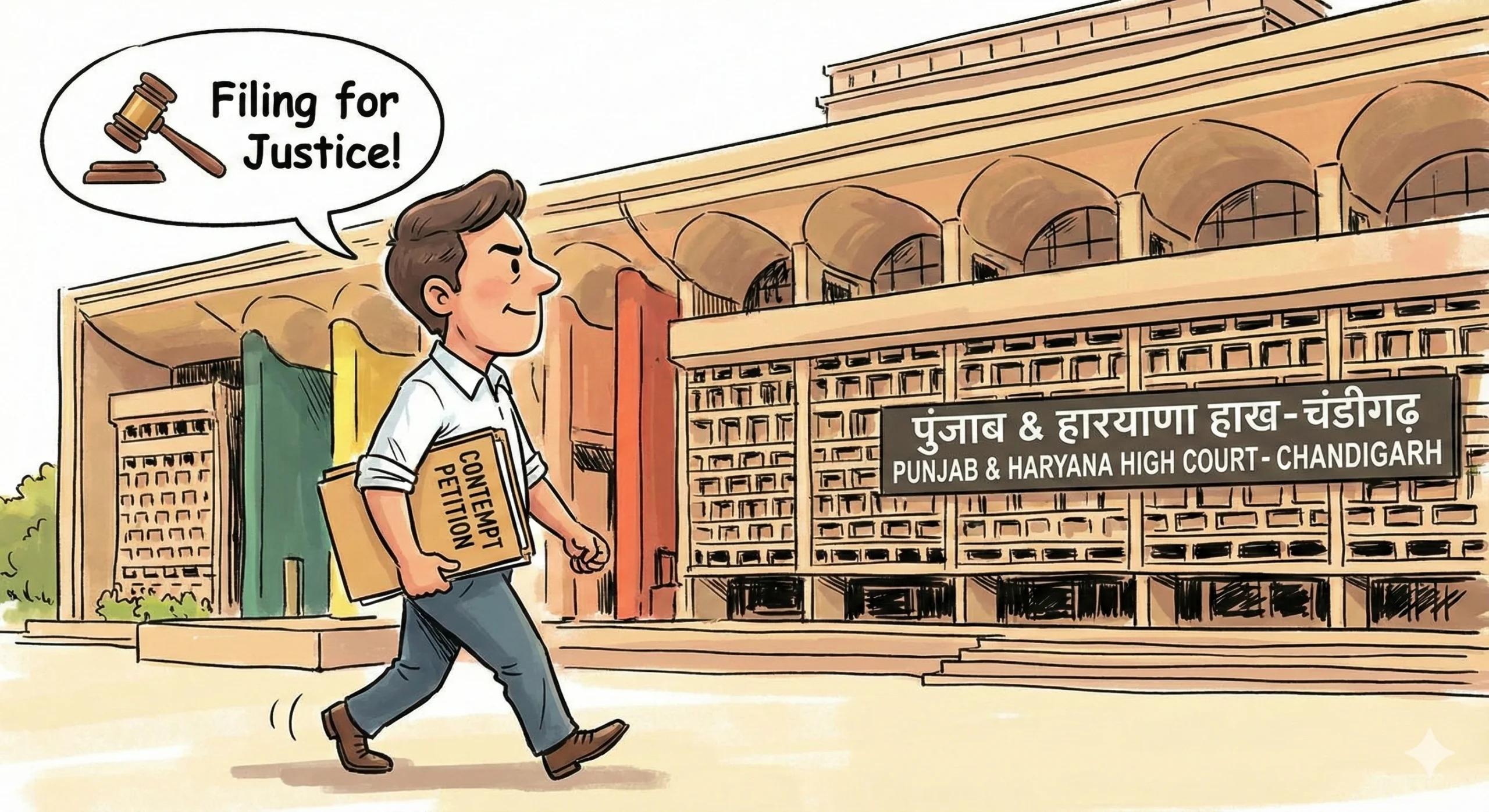
1. Punjab & Haryana High Court (Writ Jurisdiction)
For State Government, Boards, Corporations, Universities, and Public Authorities.
2. Central Administrative Tribunal (CAT)
For Central Government employees.
3. Civil Courts / Tribunals
Specific disputes where writ remedy is not appropriate.
4. Departmental Appellate Authorities
Under service rules like PCS (Appeal & Punishment) Rules.
Legal Remedies Available to Employees
- Quashing of illegal orders
- Direction for reconsideration
- Reinstatement
- Restoration of seniority
- Back wages & monetary benefits
- Compensation for harassment (rare)
- Directions to conduct inquiry afresh
- Protection against coercive action
Principles Courts Consider in Service Dispute Cases
- Natural justice — fair hearing, right to evidence
- Reasonableness — no arbitrary exercise of power
- Proportionality — punishment must fit the misconduct
- Equality before law (Article 14)
- Non-discrimination (Article 16)
- Public interest vs. individual rights
Why Early Legal Intervention Matters
Administrative actions often have long-term consequences on:
- Seniority
- Career progression
- Pension
- Departmental reputation
- Financial security
Timely representation and legal action ensure that illegal orders do not become final.
How an Advocate Can Help in Service Disputes
A service law practitioner assists in:
- Examining service rules
- Drafting strong representations
- Filing writ petitions or appeals
- Challenging illegal inquiries
- Ensuring compliance with court orders
- Negotiating with the department when appropriate
This ensures protection of rights and faster resolution.
Conclusion
Service disputes require deep understanding of service jurisprudence, constitutional protections, and departmental rules. If an employee faces illegal or arbitrary administrative action, they have multiple legal remedies available through High Courts, Tribunals, and departmental processes.

Related Posts

Comments (0)